
When purchasing a sausage processing line, many customers encounter the same question: Why do prices range from a few thousand to hundreds of thousands of dollars?
In reality, the price depends not only on the sausage processing equipment itself but is also closely related to configuration, technical specifications, and production requirements. Understanding these factors is essential to avoid "low-price traps" or "overinvestment" and make more rational purchasing decisions.
Overview of Sausage Production Line Price Ranges
Based on market data, sausage processing line prices generally fall within the following ranges:
- Standard configuration lines: Approximately $20,000 – $100,000
- Fully automated integrated lines: $100,000 – $500,000+
👉 Conclusion:
The essence of the price difference lies in "configuration variations," not simply the number of machines.
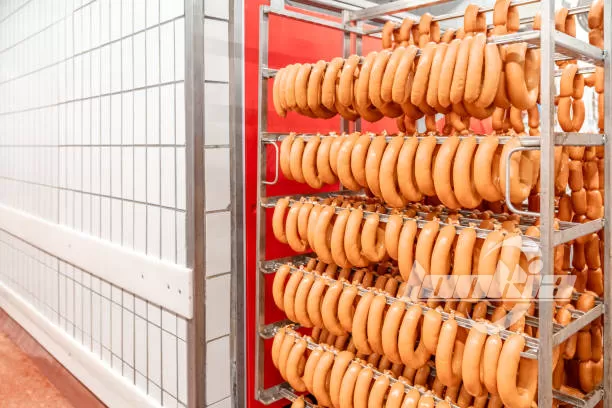
Core Factors Affecting Sausage Production Line Prices
1. Equipment Configuration and Combination
A complete sausage production line typically includes: meat grinders, mixers, stuffers, slicers, smoking equipment, etc.
👉 Impact Logic:
- More individual machines → Higher price
- Greater functional integration → Higher cost
Different combinations directly determine the overall pricing structure
2. Production Capacity and Processing Capacity
Production capacity is one of the most direct factors affecting sausage processing equipment price.
- Higher processing capacity
- Faster operating speed
- Larger equipment specifications
👉 Costs increase accordingly
High-capacity equipment typically requires a more robust structure and higher-grade motor systems, resulting in significantly higher prices
3. Level of Automation
The level of automation determines whether the sausage production equipment is "worth the price."
- Semi-automatic: Lower price, but relies on manual labor
- Fully automatic: Higher price, but more consistent efficiency
👉 Automation systems (such as PLC control, automatic dosing, and integrated production) significantly increase costs but reduce labor requirements
4. Materials and Manufacturing Processes
In food processing equipment, materials directly affect price and service life.
Common differences:
- Standard steel vs. food-grade stainless steel
- 304 vs. 316L stainless steel
👉 Impact:
- Corrosion resistance
- Ease of cleaning
- Service life
Equipment made from high-grade materials is more expensive but offers greater long-term reliability
5. Features and Technical Specifications
Additional features are a key factor driving price differences:
- Vacuum filling
- Automatic batching
- PLC touchscreen system
- CIP cleaning system
👉 Conclusion:
More features ≠ necessarily better
The key is whether it "suits your product"
Advanced features increase costs but improve product consistency and production efficiency
6. Degree of Customization
Standard Equipment vs. Custom Production Lines
Customization includes:
- Adaptation for specific sausage types
- Production process adjustments
- Voltage and layout design
👉 The more customization, the higher the price
However, this can also reduce future retrofitting costs
7. Brand and After-Sales Service
Significant price differences exist among manufacturers, primarily due to:
- Equipment stability
- After-sales response speed
- Technical support capabilities
👉 Common issues with low-cost equipment:
- High failure rates
- Lack of technical support
Equipment suppliers like Lonkia prioritize long-term operational stability and service guarantees, offering better overall value for money.
How to Control Procurement Costs?
1. Clearly Define Actual Production Capacity Needs
Avoid:
- Excess capacity → Waste of funds
- Insufficient capacity → Restricted growth
2. Prioritize Investment in Core Equipment
We recommend focusing on:
- Sausage stuffers
- Mixing systems
These directly impact product quality
3. Balance Automation with Budget
More automation isn't necessarily better; rather:
👉 Does it match your production scale?
4. Consider Long-Term Operating Costs
Including:
- Maintenance costs
- Labor costs
- Downtime losses
Long-term costs are often more important than the equipment price
Summary
The price of a sausage processing line is essentially a comprehensive reflection of "performance + configuration + long-term value."
A reasonable procurement strategy should be:
- Define requirements
- Match configurations
- Focus on long-term benefits
Selecting the right equipment is not just about reducing costs; it is a critical step toward enhancing production stability and market competitiveness.