
When purchasing an industrial meat mixer, determining the appropriate production capacity is one of the most critical considerations. An improper selection not only disrupts production rhythms but also directly increases operating costs. This article will help you scientifically determine the most suitable equipment capacity by examining factors such as equipment structure, vacuum systems, and production cycles.
The Core Logic Behind Industrial Meat Mixer Capacity
Many customers focus solely on the rated capacity listed for the equipment, but in reality:
👉 Production Capacity = Batch Capacity × Batch Efficiency
Common equipment capacity ranges include:
- 80–140 kg/batch
- 200 kg/batch
- 300–500 kg/batch
- 800 kg+/batch
However, it is important to note:
Capacity is merely the foundation; what truly determines production capacity is "mixing time + operational efficiency."
How to Calculate Actual Production Capacity
In actual production, we recommend using the following formula:
Daily Output = Batch Capacity × Batches per Hour × Operating Hours
For example:
- 200 kg/batch
- 8–10 minutes per batch
- Approximately 6–7 batches per hour
👉 Actual output can reach: 1,200–1,400 kg/hour
Compared to relying solely on specifications, this calculation method better reflects actual production conditions, preventing the selection of undersized vacuum mixer machine or wasted investment.
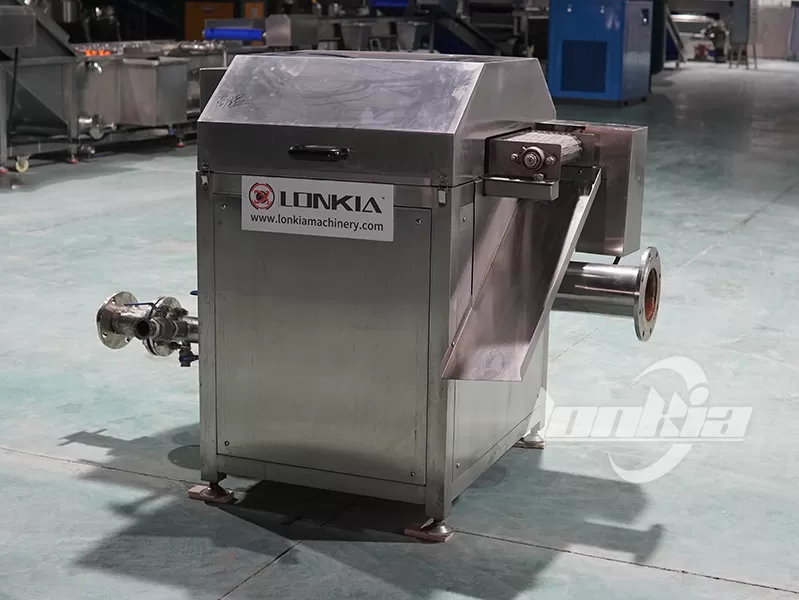
The Actual Impact of the Vacuum System on Output
In modern meat processing, the vacuum system has become one of the key factors influencing output.
- Reduced Mixing Time: Under vacuum conditions, materials are turned over more thoroughly, resulting in higher mixing efficiency and a significant reduction in processing time per batch
- Increased Effective Output: The vacuum state promotes protein release, enhancing the binding properties and structure of the meat mixture, thereby improving yield.
- Reduced Re-processing: Uniform mixing is achieved in a single pass, eliminating the need for rework and improving overall production cadence.
👉 Conclusion:
For equipment of the same capacity, vacuum mixer machines deliver higher actual output.
Key Equipment Structures Affecting Output
The output of a high-efficiency industrial meat mixer depends not only on its capacity but also on design details:
- Dual-shaft mixing structure: Enables material flipping and circulation, prevents mixing dead zones, and improves uniformity
- Variable-frequency speed control system: Adjusts rotation speed based on different products, enhancing adaptability
- Automatic discharge system: Reduces downtime and boosts continuous production capacity
- Vacuum sealing system: Maintains a stable negative pressure environment, ensuring consistent quality across every batch
These configurations collectively determine the meat mixer machine's sustained output capacity.
How to Select the Right Production Capacity for Your Facility?
When selecting vacuum mixing machine, we recommend evaluating the following three factors:
- Daily Production Targets: First, determine the daily volume of raw materials to be processed, then work backward to determine the required equipment capacity
- Product Process Requirements: Products such as sausages and meatballs require high mixing uniformity and are better suited for vacuum equipment
- Batch Frequency: If production schedules are tight, prioritize models with higher mixing efficiency
👉 Recommendation:
When selecting industrial meat mixer, reserve approximately 20% of production capacity to facilitate future expansion.
Lonkia Vacuum Mixer Machine's Production Capacity Optimization Design
In its equipment design, Lonkia prioritizes stable output:
- Dual-shaft structure enhances mixing efficiency
- Vacuum system reduces processing time
- Automated control minimizes human error
In practical use, this helps customers achieve a more continuous and efficient production rhythm.
Summary
When selecting an industrial meat mixer, focus not just on the size of the equipment, but on overall production capacity:
✔ Look at capacity, but also at batch efficiency
✔ Look at specifications, but also at actual output
✔ Look at price, but also at long-term production capacity
Only by matching the equipment to real production needs can it truly deliver value, achieving stable output and sustained profitability.