
During meat processing, cutting frozen meat blocks and bone-in cuts often presents challenges such as high hardness, significant cutting resistance, and uneven cut thickness. Selecting the right bone saw machine can help processing companies handle frozen meat, beef bones, pork ribs, and other suitable raw materials more effectively. However, determining whether a bone saw machine is suitable for frozen meat requires more than just considering motor power; it also involves a comprehensive evaluation of the raw material's condition, cut dimensions, saw blade configuration, and the machine's safety design.
Can A Bone Saw Cut Frozen Meat?
Yes, provided the equipment has the necessary cutting capacity and the condition and size of the frozen meat fall within the machine's specifications. Bone saw machines use high-speed saw blades to cut hard materials and can be used to process frozen meat blocks, bone-in cuts, and certain bone-based materials.
Compared to softer meats, frozen meat typically presents higher cutting resistance. If the raw material is too hard, exceeds the machine's capacity, or the saw blade is in poor condition, issues such as difficulty cutting, uneven cuts, or accelerated blade wear may occur. Therefore, before purchasing, you should confirm with the supplier whether the target model is suitable for your specific raw materials.
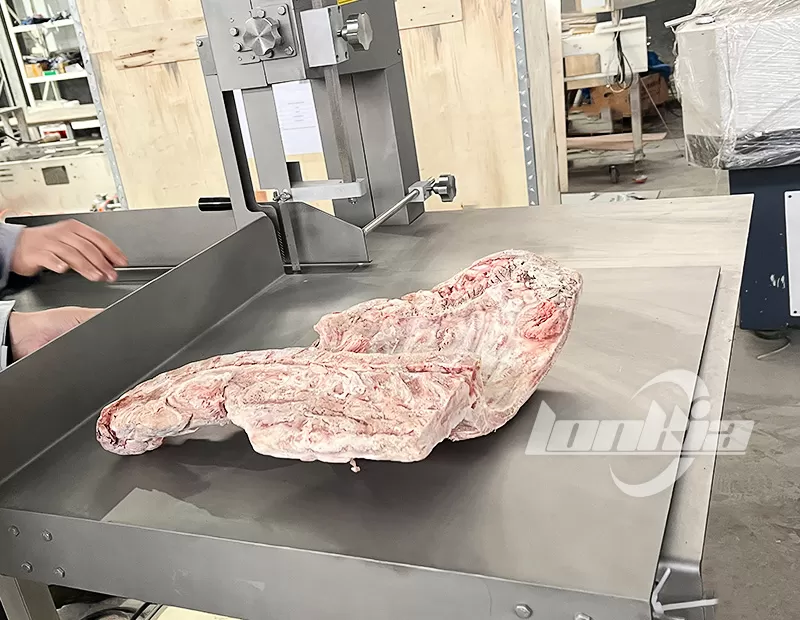
What to Consider When Selecting a Bone Saw Machine for Frozen Meat?
1. Size and Condition of Frozen Meat
The size of the raw material is a key factor in selecting a bone saw. When purchasing, measure the maximum height, width, and length of the frozen meat blocks, and specify their frozen state, product type, and expected cutting specifications.
For example, frozen beef blocks and bone-in pork have different structures and may require different cutting spaces and saw blade specifications. Providing accurate raw material dimensions helps suppliers determine whether the equipment is suitable, preventing issues after purchase where the raw material cannot pass through the cutting area smoothly.
2. Saw Blade Configuration and Cutting Thickness
The sharpness, specifications, and installation status of the saw blades directly affect cutting performance. Before processing frozen meat, check whether the saw blades are worn or installed correctly, and verify the tension according to the equipment manual.
If you need to cut meat into uniform thicknesses, adjust the thickness stops or positioning devices appropriately. For products of different specifications, perform test cuts first to check whether the cut surfaces are smooth and the dimensions meet requirements before finalizing the processing parameters. Do not compensate for saw blade wear or mismatched equipment configurations by applying excessive force.
3. Motor Performance and Equipment Stability
Cutting frozen meat involves significant resistance, so motor performance, the drive system, and frame stability are all critical considerations. When purchasing a bone saw machine, verify not only the rated power but also the maximum raw material dimensions the equipment can handle, the applicable materials, and the continuous operation requirements.
LONKIA meat sawing machines feature a stainless steel construction and are equipped with adjustable cutting thickness settings, making them suitable for cutting bone-in cuts and frozen meat within the equipment's specified range. Whether a specific model meets processing requirements should still be determined based on actual technical specifications and raw material test results.
How to Improve Cutting Results for Frozen Meat?
Standardize Operating Procedures
Before formal processing, confirm that the saw blade, safety guards, and worktable are in proper working order, and set the cutting thickness according to product requirements. During operation, place the raw material securely and use the meat sawing machine's built-in feed mechanism or safety guard to avoid sudden force or forcing the material through.
If you notice an abnormal increase in cutting resistance, significant equipment vibration, or a decline in cut quality, stop operation immediately. Disconnect the power supply before inspecting the cause; do not clean the saw blade or clear jams while the machine is running.
Regular Cleaning and Maintenance
During the processing of frozen meat, meat scraps, fat, and bone fragments may adhere to the saw blade and work area. After each processing session, shut down the machine and disconnect the power supply according to the manufacturer's instructions, clean any removable parts, and inspect the saw blade for wear.
Regular maintenance helps reduce unplanned downtime, maintain cutting quality, and ensure hygienic conditions for subsequent food processing.
How to Choose the Right Bone Saw for Your Business?
When purchasing a bone saw machine, it is recommended to focus on the following information:
- Raw Material Type: Frozen meat, bone-in meat, or other bone-containing materials.
- Maximum Raw Material Size: Confirm that the cutting area can accommodate the actual product.
- Cutting Thickness: Does it meet the specifications required for the target product?
- Equipment specifications: Motor power, power supply requirements, and continuous operation requirements.
- Safety and maintenance: Safety guards, cleaning methods, saw blade replacement, and spare parts availability.
If you are looking for a bone saw machine suitable for frozen meat processing, please contact LONKIA and provide photos of the raw materials, their dimensions, the target cutting thickness, and the expected output. Reviewing the equipment configuration based on this information will help you select a cutting solution that better meets your actual production needs.