
In the processing of cured meats, the brine formulation is only one factor affecting product quality. A vacuum tumbler machine combines vacuum extraction with tumbling, causing the meat pieces to continuously turn, collide, and be kneaded inside the drum. This helps the brine come into more uniform contact with the meat while improving the tenderness, elasticity, and binding properties of the meat products. For beef, pork, chicken, seafood, and specialty cured products, properly setting the vacuum level, tumbling speed, load capacity, and processing time is key to achieving consistent processing results.
What Process Parameters Should Be Considered for Vacuum Tumbler Machines?
Since the tissue structure, cut size, and brine formulations vary among different meat products, equipment operating parameters cannot be set entirely according to a single standard. When purchasing a vacuum tumbler machine, special attention should be paid to the following parameters.
1. Vacuum Level
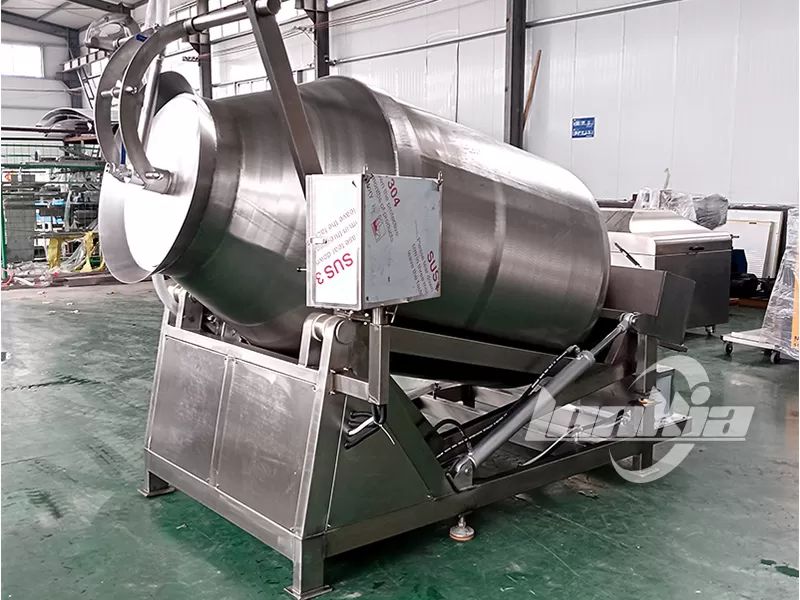
The vacuum level directly affects the processing environment inside the drum. LONKIA meat vacuum tumblers can achieve a maximum vacuum level of -0.09 MPa. The equipment first extracts air from the drum, then, in conjunction with drum rotation, causes the meat to tumble and be kneaded in a vacuum environment.
In actual production, the goal is not simply to achieve the highest possible vacuum level; rather, testing should be conducted based on the type of meat, product condition, and brining process. A stable vacuum system and reliable sealing performance are also key factors to verify when selecting equipment.
2. Tumbling Speed
Tumbling speed determines the movement of meat pieces inside the drum. The tumbling speed of this meat tumbler machine is adjustable within a range of 0–15 RPM.
Different products have varying requirements for mechanical action. Meat piece size, texture, and desired mouthfeel all influence speed selection; therefore, the adjustable speed design provides greater flexibility for process adjustments across different recipes and products.
3. Load Capacity and Drum Volume
The vacuum tumbler machine has a processing capacity of 100–1,000 kg per batch, with a drum volume of 100–500 L.
When selecting a model, one should not focus solely on the batch weight in kilograms but must also consider whether the material can be thoroughly tumbled inside the drum. If the load capacity is not properly matched to the drum's internal space, it may affect the movement of the meat pieces and the distribution of the brine. Therefore, equipment specifications should be determined based on the actual raw material density, batch weight, and production cycle.
How Is the Tumbling Time Determined?
Tumbling time must be adjusted based on the type of meat, cut size, brine ratio, and the desired product condition. The vacuum tumbler machine is equipped with a control system that allows users to configure the tumbling process, ensuring each batch is processed according to a relatively stable procedure.
For new products, it is recommended to first conduct test runs to determine the appropriate vacuum level, tumbling speed, and processing time, then record the test results and establish standard process parameters, rather than applying a fixed processing time to all products.
Why Must Vacuum and Tumbling Be Used in Combination?
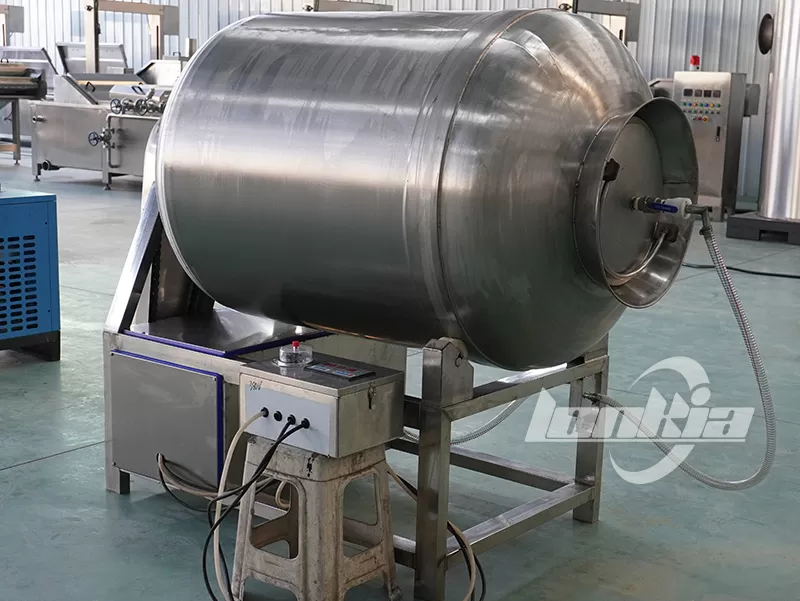
Rotation alone merely sets the meat pieces in motion, whereas a vacuum environment alters the conditions inside the drum. LONKIA meat tumbler machine combines vacuum extraction, tumbling, impact, and kneading, causing the meat to continuously interact during processing. This promotes uniform contact with the brine and improves the binding and texture of the meat products.
Therefore, when evaluating a piece of equipment, one should comprehensively consider whether the vacuum system, tumbling system, control methods, and tank structure are well-matched.
What Else Should You Look for When Purchasing a Vacuum Meat Tumbler?
- Food-contact materials: The vacuum tumbler machine features a food-grade stainless steel tank, suitable for processing foods such as meat and seafood.
- Controls and cleaning: The automatic control system facilitates the setting and management of processing cycles, while removable components facilitate daily cleaning and maintenance. For companies engaged in continuous cured meat production, these design features directly impact operational convenience and the efficiency of daily maintenance.
Selecting Equipment Based on Product Specifications
When selecting a meat vacuum tumbler, it is recommended to provide the equipment supplier with details regarding the type of meat, batch weight, meat piece size, brine recipe, target output, and existing production process. Based on this information, the supplier can match the tank capacity, tumbling speed, vacuum system, and motor power accordingly.
LONKIA offers vacuum tumblers with processing capacities ranging from 100 to 1,000 kg per batch and can customize equipment configurations based on actual processing needs, providing equipment solutions for the processing of marinated meats, seafood, and related meat products.
Conclusion
For cured meat production, the key focus should be on achieving a proper balance between vacuum level, tumbling speed, load capacity, and processing time. Only by clearly defining your product and production requirements and then selecting the appropriate vacuum tumbler machine can you ensure that the equipment parameters truly support a stable curing process.