
When purchasing an industrial tunnel oven, price is often the first concern for customers. However, quotes for different units can vary significantly; even if the equipment shares the same name, the actual configuration, processing capacity, and control methods may differ. Therefore, understanding the factors that influence the price of an industrial tunnel oven is more important than simply comparing quotes.
For continuously processed products such as sausages, chicken, and meat patties, tunnel ovens not only handle the heating process but also directly impact processing time, consistency of doneness, and the seamless integration with subsequent production stages.
What Factors Influence the Price of an Industrial Tunnel Oven?
1. Equipment Processing Capacity
Equipment processing capacity is a key factor affecting tunnel oven price. When selecting a model, one should not rely solely on hourly throughput; the decision must also take into account product weight, specifications, arrangement, and dwell time within the oven.
For example, sausages of different diameters and lengths will have varying requirements for cooking time and conveyor speed. Therefore, when requesting a quote, provide the equipment manufacturer with the product type, individual product weight, target output, and processing requirements to receive a more accurate equipment proposal and quote.
2. Steam System and Distribution Method
The core of an industrial tunnel oven is not merely a heating chamber; how steam enters the equipment and how uniformly it acts on the products is equally important.
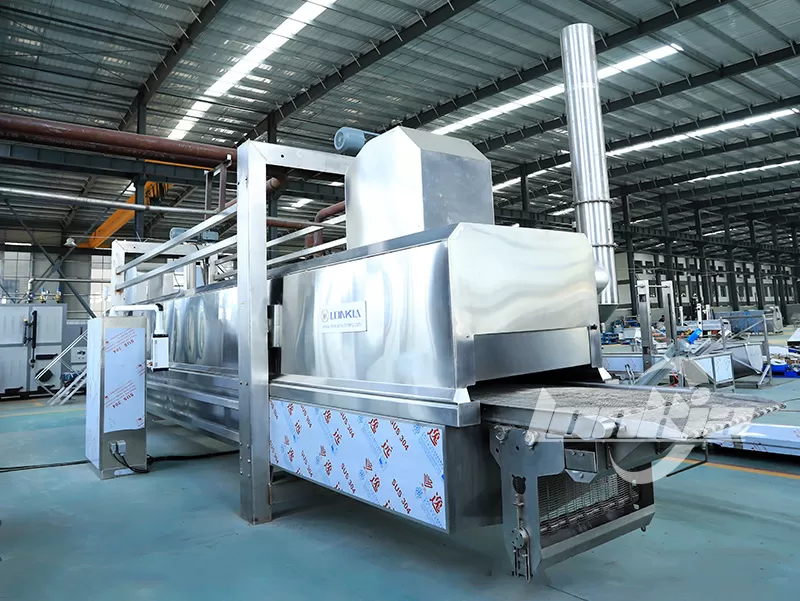
Lonkia steam tunnel machines utilize a steam injection and distribution system that allows steam to rapidly reach the processing area while maintaining as uniform heating conditions as possible. The effectiveness of steam distribution directly affects the degree of doneness at different locations on the product, making it a key aspect to consider in equipment configuration and pricing.
Why Does the Control System Affect the Equipment Quote?
Dual-Zone Independent Control
Different products may require distinct steaming, heating, or browning conditions during processing. If the entire tunnel has only one control zone, flexibility in process adjustments is limited.
This industrial tunnel oven features a relatively independent dual-zone control system, allowing separate adjustment of steaming and baking conditions in each zone, enabling the equipment to better adapt to continuous processing operations.
Therefore, when comparing tunnel oven prices, customers should not only consider the total equipment cost but also verify the temperature control, zone control, and steam control methods.
The Conveyor System Is Also a Significant Component of the Price
Industrial tunnel ovens use conveyor belts to continuously feed products into the processing zone, and the conveyor speed determines the products' dwell time inside the oven.
If the steam tunnel machine can adjust the conveyor speed based on different products, it becomes easier to match varying processing times. This is particularly important for products such as sausages, chicken, and meat patties.
Therefore, when requesting a quote, it is recommended to confirm:
- Is the conveyor speed adjustable?
- Is the conveyor system compatible with the target output?
- How long does the product need to be processed inside the oven?
- Can the infeed and outfeed be seamlessly integrated with upstream and downstream equipment?
What Parameters Should Be Prepared Before Requesting a Quote?
To obtain an accurate tunnel oven price, customers can prepare the following information in advance:
- Products to be processed and their dimensions;
- Target hourly output;
- Unit weight of the product;
- Whether steaming, baking, or simultaneous browning is required;
- Estimated processing time;
- Information on upstream and downstream equipment in the production line;
- Requirements for conveying methods and control systems.
The more specific these parameters are, the easier it is for the manufacturer to determine the tunnel length, conveying speed, steam system, and control configuration based on the actual process.
Conclusion
The price of an industrial tunnel oven is not determined solely by the equipment's dimensions but is closely related to processing capacity, the steam system, the conveying system, zone control, and specific process requirements. For customers planning to purchase a tunnel oven, it is essential to first determine the product and production parameters, and then compare the configurations and quotes of different equipment to find the solution that truly suits their production line.
Lonkia can provide corresponding industrial tunnel oven configuration solutions based on customers' product specifications and production requirements, helping them achieve comprehensive alignment from equipment structure and processing workflows to production line integration.