
In meat processing, vacuum meat tumblers are critical equipment that influence curing results, product quality, and production stability. When purchasing equipment, meat product manufacturers often face a key question: What capacity vacuum tumbler should they choose?
Selecting the right capacity isn't simply a matter of looking at the equipment model; it requires careful consideration of the type of product being processed, batch throughput, production pace, and subsequent processing steps. Selecting the appropriate industrial vacuum tumbler can help companies achieve more consistent curing results while avoiding issues such as equipment underutilization or an inability to meet production demands.
Clarify Your Production Needs Before Selecting a Capacity
Before purchasing a vacuum meat tumbler, you must first determine your actual production needs, including the daily volume of meat processed, product types, and production frequency.
Different meat products have varying requirements for the tumbling process. For example, products such as sausages, ham, bacon, and marinated chicken typically require a vacuum environment and mechanical tumbling to ensure the marinade penetrates the meat fibers more evenly, thereby improving product texture and consistency.
Therefore, when selecting equipment capacity, customers should focus on the following:
- How many kilograms of raw material need to be processed per batch;
- How many batches are planned for daily production;
- Whether the machine needs to be connected in a continuous line with other processing equipment;
- Whether the products require different tumbling recipes.
Only after clarifying this information can customers select equipment specifications that best meet their needs.
Consider Effective Loading Capacity Instead of Drum Volume
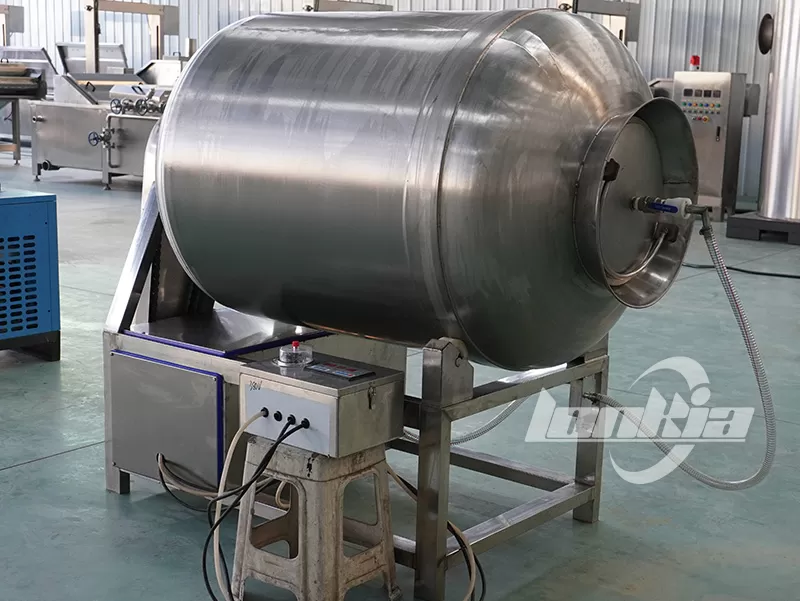
When inquiring about commercial vacuum tumblers, many customers focus on the equipment's rated capacity in liters or drum volume; however, in actual production, the machine's effective loading capacity is more important.
Marinating vacuum tumblers require sufficient space to allow the meat to fully tumble and move within the drum. Overloading the drum can hinder the collision and friction between meat pieces, resulting in uneven curing; underloading, on the other hand, may reduce the equipment's operational efficiency.
Therefore, when selecting a capacity, you should confirm the following with the supplier:
- What is the total drum capacity?
- What is the recommended loading ratio?
- What is the actual processing weight per batch?
Lonkia marinating vacuum tumblers are designed with optimal drum structures and operating parameters tailored to specific processing needs, helping customers select the most suitable equipment solution based on their product characteristics.
Selecting the Appropriate Capacity for Different Meat Products
Different products have varying requirements for the vacuum tumbling process, so equipment capacity selection must be based on product characteristics.
For example:
- Sausage production: Requires thorough mixing of the meat mixture or meat chunks to ensure even seasoning distribution and improve subsequent filling efficiency.
- Marinated chicken products: The focus is typically on the rate of marinade absorption and product tenderness, requiring the equipment to provide a stable vacuum environment and consistent tumbling performance.
- Products such as ham and bacon: Greater emphasis is placed on preserving meat texture and ensuring product consistency after processing.
For companies with a wide variety of products, a vacuum meat tumbler with adjustable parameters should be selected. By adjusting tumbling time, rotation speed, and vacuum conditions, the equipment can meet the processing needs of different products.
Key Equipment Configurations to Consider When Selecting a Vacuum Tumbler
In addition to capacity, the equipment's structure and functionality also impact long-term performance.
When purchasing, it is recommended to focus on the following aspects:
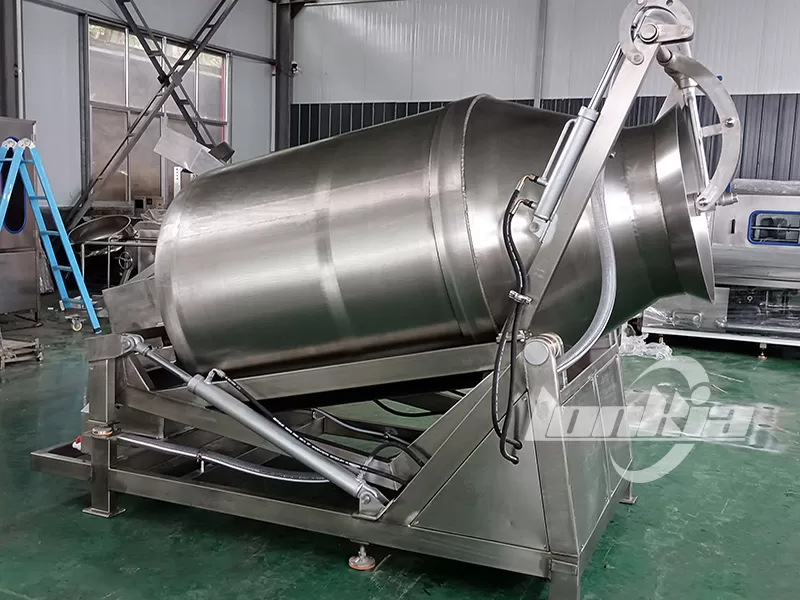
- Vacuum System: The vacuum system determines whether the equipment can create a stable low-pressure processing environment, which affects the penetration of the seasoning solution.
- Drum Structure: A well-designed drum and internal baffles help ensure uniform tumbling of the meat mixture and minimize product damage.
- Control System: Adjustable parameters for time, rotational speed, and vacuum levels can meet the processing needs of different products.
- Material Quality: A food-grade stainless steel construction not only meets food processing requirements but also facilitates daily cleaning and maintenance.
These configurations collectively determine the processing effectiveness and service life of the industrial vacuum tumbler.
Selecting the Right Vacuum Tumbler Through Professional Solutions
When selecting the capacity of a vacuum meat tumbler, there is no one-size-fits-all standard applicable to all businesses. The correct approach is to conduct a comprehensive assessment based on actual production needs, product types, and processing objectives.
A professional equipment supplier should not only provide individual machines but also offer equipment selection recommendations tailored to the customer's production process, including capacity matching, technical parameter configuration, and guidance on subsequent use.
Lonkia specializes in the R&D and manufacturing of meat processing equipment. We provide tailored industrial vacuum tumbler solutions based on each customer's specific production needs, helping food processing companies improve product consistency and production efficiency