
When selecting meat smoking equipment, price is often one of the primary concerns for processing plants. Significant price variations exist between different manufacturers and models, and these differences are not arbitrary but determined by a series of key factors. This article will delve into the core elements influencing meat smoking machine price from the perspective of actual customer concerns, helping procurement personnel establish budgets more scientifically.
Structural Materials Impact Meat Smoking Machine Price
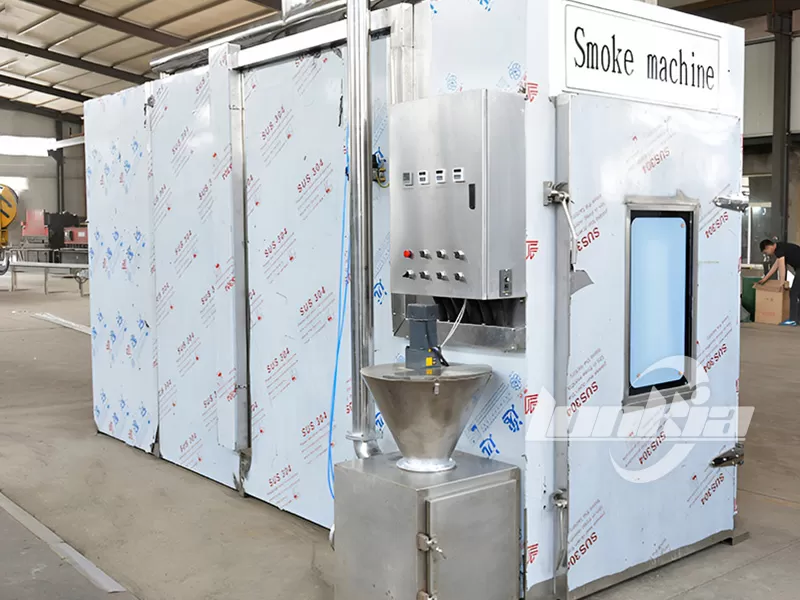
Smoke oven machines are typically constructed from food-grade stainless steel. However, variations exist among manufacturers in steel thickness, surface treatment processes, and internal welding quality.
Thicker plates provide superior heat retention and extended service life, while precise TIG welding ensures cabinet sealing, preventing heat loss and enhancing smoking efficiency. For instance, Lonkia employs thickened stainless steel construction for superior corrosion resistance, resulting in slightly higher upfront costs but greater long-term cost-effectiveness.
Heating System Configuration Impacts Price
Common heating methods for sausage smoking machines include electric heating or steam heating, with each directly influencing procurement costs.
- Electric heating offers simpler construction and easier installation, though variations in heating element quality create price differences.
- Steam heating requires integrated boiler systems, resulting in more complex smoker structures and higher manufacturing costs.
Additionally, premium equipment incorporates multi-stage precision temperature control systems for stable smoking temperature regulation. These control modules represent higher-cost components.
Smoking System and Air Circulation Structure
High-quality meat products demand strict standards for smoking effects and color uniformity. Consequently, the power of circulation fans, duct layout, and smoke generator structure all influence machine pricing.
More balanced air circulation ensures more uniform heating and consistent product coloration.
Lonkia's circulation air system employs optimized design to effectively prevent localized temperature deviations. While such structural design increases manufacturing costs, it significantly enhances product consistency and reduces defect rates.
Automation Level Affects Meat Smoking Machine Price
Automation is a key factor affecting meat smoking machine price. Meat smoker machines equipped with PLC touchscreen controls typically store multiple process parameter sets and support automatic humidity adjustment, automatic exhaust ventilation, and automatic alarm functions. While core components of such control systems (e.g., sensors, touch devices) carry higher costs, they significantly reduce manual labor intensity and improve batch stability.
For customers seeking long-term production stability and standardized factory operations, automation investment is crucial.
Conclusion
The price of smoke oven machines is influenced by multiple factors including materials, structure, heating methods, air circulation systems, and automation levels. When selecting equipment, customers should not focus solely on the initial quote but also evaluate long-term operating costs, failure rates, maintenance convenience, and product consistency.
Choosing equipment suppliers like Lonkia, which offer stable performance, reliable construction, and reasonable price points, enables processing plants to achieve higher production returns within their budget.