
In the food processing industry, the vacuum marinade tumbler has become a key piece of equipment for enhancing the quality and efficiency of meat curing. For producers aiming to achieve deep flavor penetration, tenderized meat, and increased output in a short timeframe, mastering the correct operation of this machine is crucial. This article provides a practical operating guide based on actual steps and precautions, helping you overcome common challenges in the production process.
What is a Vacuum Tumbler Machine and How Does It Work?
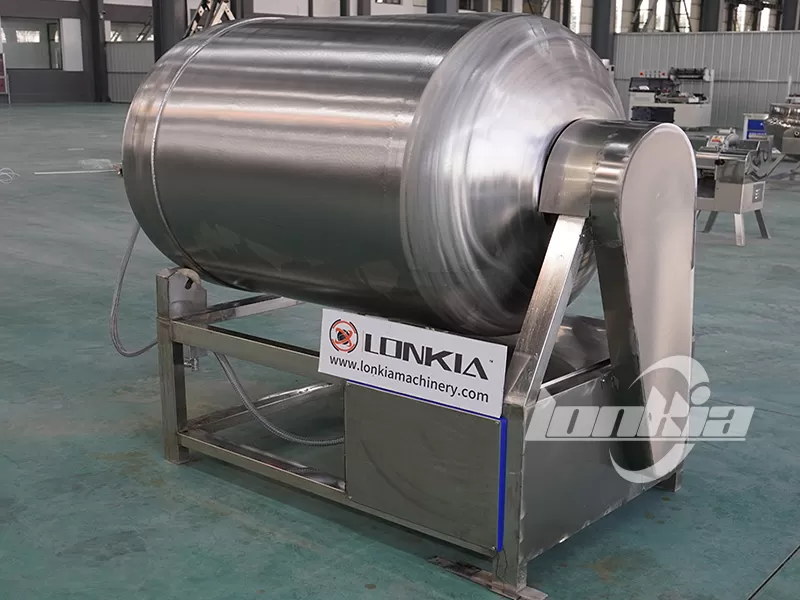
A vacuum tumbler machine utilizes a combination of negative pressure and mechanical tumbling. It places meat and marinade into a sealed drum, continuously rotates the contents while evacuating air to create a vacuum, and allows the meat pieces to absorb the marinade more rapidly and evenly through rolling and collision. Traditional marinating requires hours or even days, whereas vacuum tumbling achieves comparable results within minutes.
This vacuum-tumbling combination not only accelerates marinade penetration but also mechanically breaks down muscle fibers through impact. This enhances tenderness and ensures consistent flavor throughout the meat.
1. Preparation: Loading Raw Materials and Marinade
Before starting the operation, complete the following preparations:
- Wash and cut meat pieces: Cut the meat into sizes suitable for marinating, ensuring uniformity for more balanced flavor penetration during tumbling.
- Select appropriate marinade: Prepare specialized brine, spices, and flavor enhancers based on product type (e.g., beef, chicken, pork, or seafood).
Place meat into the meat marinade machine, add the prepared marinade, then close the tumbler door, ensuring a secure seal.
2. Initiate the Vacuum and Tumbling Process
The control interface typically includes vacuum settings, tumbling duration, and speed adjustment. The standard procedure is as follows:
1. Vacuum initiation phase: Press the vacuum button to expel air from the tumbler, creating a negative pressure environment.
2. Set tumbling parameters:
- Duration: Adjust processing time based on meat type and thickness (typically 15–30 minutes replaces hours of traditional marinating).
- Speed: Adjust rolling speed to suit different products, preventing excessive impact that damages meat texture.
3. Begin Tumbling: The machine rotates the drum, causing meat pieces to continuously collide and massage under vacuum conditions, facilitating marinade penetration.
During this tumbler meat processing, vacuum pressure helps open meat fibers for faster marinade absorption, while the rolling motion simulates continuous massage, ensuring thorough seasoning of each piece.
3. End Process & Discharge Cleaning
Upon reaching the set time, the machine automatically or manually releases the vacuum. At this point:
- Release Pressure: Gradually reduce negative pressure to prevent marinade splatter from rapid pressure release.
- Discharge & Inspection: Open the drum door, remove the marinated product, and verify marinade penetration and texture meet expectations.
- Clean Equipment: After tumbling, promptly wash the inner drum and accessories to prevent residue from affecting future results.
📍 Key Operational Tips
✅ Avoid Overloading: Do not overfill the meat marinade machine to ensure even marinade distribution.
✅ Parameter Adjustment: For different meats (chicken, pork, beef, fish, etc.), select optimal time and speed settings based on texture.
✅ Maintenance: Regularly inspect the vacuum pump and seals to ensure airtight integrity, guaranteeing consistent results per batch.
Summary
Mastering the correct use of the vacuum marinade tumbler is crucial for enhancing processing efficiency and product quality. By optimally configuring vacuum levels, tumbling duration, and speed, you can not only shorten marinating cycles but also enhance flavor consistency and meat tenderness. For food processing plants pursuing high-efficiency production, this mechanized process is central to achieving stable quality and high output. Whether you're a novice producer or an enterprise seeking to optimize existing workflows, this operational guide aims to address practical challenges and elevate overall production efficiency.