
In meat processing equipment, the meat bowl cutter is a key piece of machinery that influences the fineness and consistency of the final product. Whether producing sausages, minced meat, or emulsified products, the equipment's structural design and performance parameters directly determine the quality of the finished product. For first-time buyers, understanding a clear purchasing strategy can effectively prevent wasted costs and production issues.
Define Processing Requirements and Product Standards
Before selecting a meat bowl cutter, you must first determine the processing requirements for the final product, such as whether emulsification is needed, whether a fine texture is required, or whether ingredients need to be mixed uniformly.
The equipment achieves integrated cutting, mixing, and emulsification through the coordinated operation of high-speed rotating blade assemblies and the bowl. The finer the product requirements, the higher the demands on blade speed and structural stability. Therefore, defining product standards is the foundation of model selection.
Reasonable Matching of Capacity and Volume
Different models of meat bowl choppers vary significantly in processing capacity and volume. Common equipment can cover medium to high production volume requirements.
When selecting a model, it is recommended to focus on:
- Whether the hourly processing capacity meets continuous production needs
- Whether the single-batch feed volume aligns with the production rhythm
- Whether there is room for future expansion
Reasonable capacity configuration can prevent the equipment from operating at full capacity for extended periods while reserving room for future production upgrades.
Blade System and Cutting Performance
The blade structure is a core factor influencing equipment performance. High-quality bowl cutter machines typically employ a multi-blade configuration combined with high-speed rotation to achieve a more uniform cutting result.
When purchasing, pay close attention to:
- Number and layout of blades
- Rotation speed range and stability
- Whether the material is food-grade stainless steel
A stable blade system not only enhances product texture but also ensures the continuity of the processing operation.
Temperature Control Capabilities
During high-speed mixing and cutting, temperature control is a critical factor affecting the quality of the final product. Excessive heat can easily cause changes in protein structure, thereby affecting texture and appearance.
High-quality equipment typically features:
- High-speed cutting capabilities to shorten processing time
- Auxiliary cooling designs or provisions for cooling
In practical applications, effective temperature control can significantly improve product consistency.
Control Systems and Operational Convenience
Modern meat bowl cutters feature more intelligent control systems, enhancing the overall user experience.
Common configurations include:
- Multi-speed adjustment
- Automated control systems
- Simple and intuitive user interfaces
These designs minimize human error, making the production process more stable and reliable.
Materials and Structural Design
The overall structure of the equipment directly impacts durability and cleaning efficiency. High-quality bowl cutter machines typically feature an all-stainless-steel construction and an optimized internal design to minimize hard-to-reach areas.
Key Considerations:
- Is it made of food-grade stainless steel?
- Is the structure easy to clean?
- Does it operate smoothly without noticeable vibration?
Good structural design extends the equipment's service life and reduces maintenance costs.
Safety Design and Maintenance Convenience
In daily use, safety and maintenance are equally important. A well-designed meat bowl chopper should feature comprehensive safety measures.
Recommended Features:
- Safety interlock devices
- Emergency stop function
- Easy-to-disassemble cleaning structure
These features not only ensure operational safety but also help improve equipment efficiency.
Equipment Stability and Support
Stable operation is essential for continuous production. Choosing an experienced equipment supplier ensures more reliable support during both equipment selection and operation.
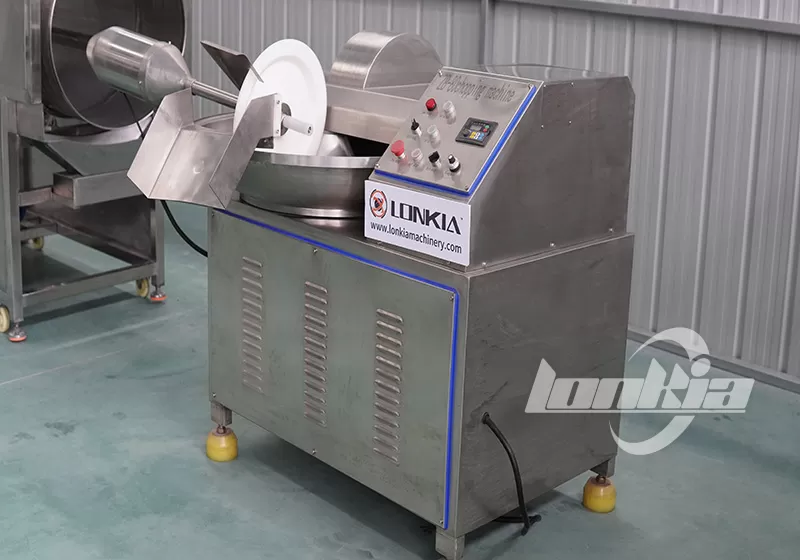
Take Lonkia as an example: its meat bowl cutter is optimized in structural design, performance specifications, and practical application to meet a wide range of meat processing needs. Additionally, comprehensive technical support helps users get up and running quickly.
Conclusion
Selecting the right meat bowl cutter is fundamentally a process of "matching needs" rather than simply comparing specifications. Conducting a comprehensive evaluation based on product type, production capacity, blade system, temperature control capabilities, and operational stability will help you complete the equipment selection process more efficiently.
A well-matched machine not only enhances product quality but also makes the production process more stable and controllable, thereby laying the foundation for long-term operation.