
In the sausage processing industry, the texture, elasticity, and stability of the product directly impact market competitiveness. As a key piece of equipment, the bowl cutter mixer not only performs the cutting function but also plays a decisive role in determining the final quality during the mixing and emulsification processes. Proper use and configuration of this equipment can significantly improve product consistency and reduce production variability.
How the Bowl Cutter Mixer Affects Sausage Quality?
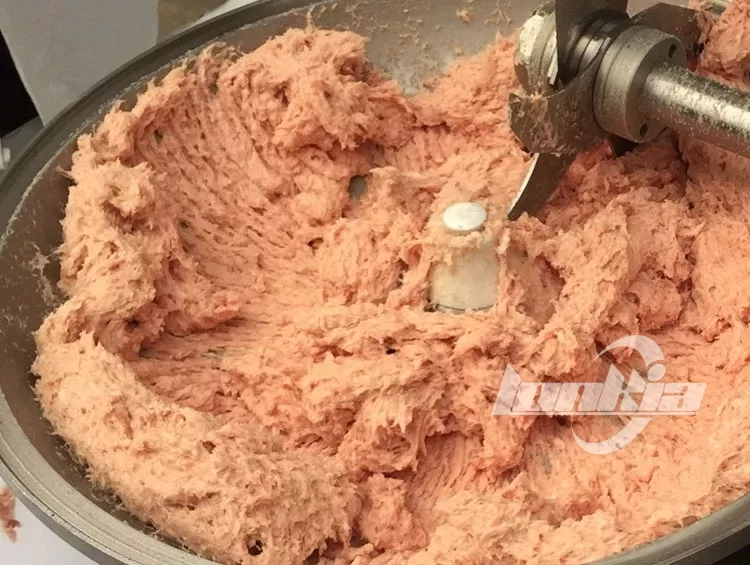
The meat bowl chopper utilizes high-speed rotating blades in conjunction with a low-speed rotating bowl to quickly mince, mix, and emulsify the meat mixture. This process allows proteins to fully release and evenly coat the fat, thereby forming a stable structure.
Compared to conventional meat grinding equipment, its advantages are primarily reflected in:
- Finer and more uniform meat paste
- More stable emulsified structure
- Smoother cross-sections of the finished product
- Greater consistency in quality across batches
This is particularly critical for processing companies seeking stable output.
Matching Blade and Bowl Speeds Determines Processing Results
Equipment operating parameters directly influence the final product structure. Properly matching blade and bowl speeds allows for flexible switching between different products.
- Higher blade speed: Suitable for emulsified sausages to enhance fineness
- Stable bowl speed: Ensures uniform feed of material into the cutting zone
- Appropriate processing time: Avoids over-shearing
It is recommended to prioritize meat bowl cutter machine with variable speed control to accommodate different raw materials and formulation requirements, making the production process more controllable.
Temperature Control Is Key to Consistent Quality
During high-speed cutting, friction can cause temperatures to rise, thereby affecting protein structure. Improper temperature control can lead to issues such as fat separation or loose texture.
Common optimization methods include:
- Adding ice water or crushed ice during processing
- Controlling the duration of each processing cycle
- Processing raw materials in stages
A stable temperature environment helps improve emulsification, resulting in sausages with a firmer, more elastic texture.
Blade Configuration Impacts Texture and Efficiency
The number and design of blades directly determine the cutting effect. Common configurations include 3-blade and 6-blade setups, with different configurations suited for varying processing needs.
- Multi-blade configuration: Suitable for fine-textured products
- High-speed rotation: Rapid emulsification
- Durable materials: Ensures long-term stable operation
In actual selection, blade quality and balance are equally important, as they directly affect equipment stability and product consistency.
Optimizing Operational Procedures to Enhance Product Consistency
Beyond equipment performance, operating methods also influence final quality. A scientific feeding sequence helps create a more stable meat paste structure.
Recommended operational approach:
Process lean meat first to establish the base structure
Add salt to promote protein extraction
Add fat and mix thoroughly
Finally, add water or additives to adjust the consistency
This process effectively enhances emulsification, resulting in a more uniform product texture.
Equipment Design Determines Long-Term Production Performance
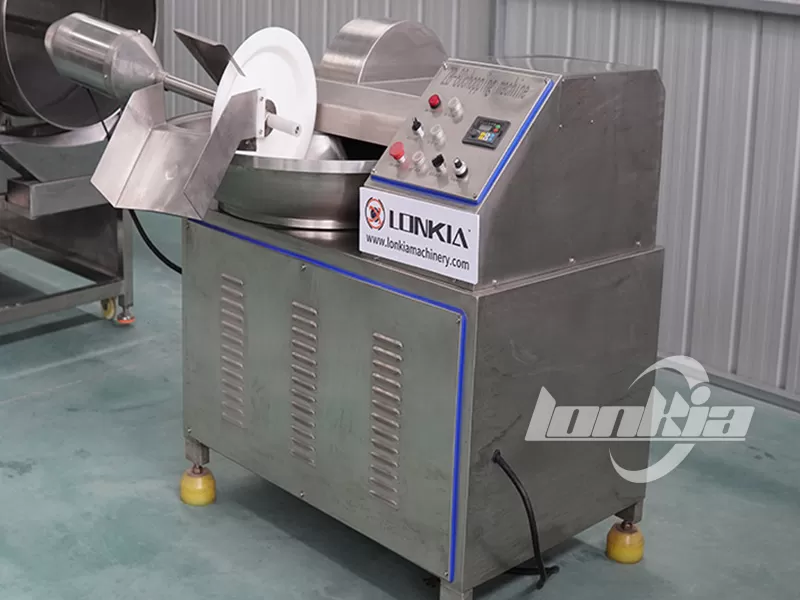
A stable and reliable equipment design is the foundation of continuous production. High-quality bowl cutter mixers typically feature the following characteristics:
- All-stainless steel construction, compliant with food processing requirements
- Compact structure and smooth operation
- Optimized discharge design to minimize residue
- Comprehensive safety protection systems
Taking lonkia meat bowl cutter machine as an example, continuous optimization in structural design and operational stability helps maintain consistent processing results during prolonged production while reducing maintenance frequency.
Key Points for Achieving Consistent Quality
To consistently produce high-quality sausages, both equipment and processes must be optimized simultaneously:
- Select a meat bowl chopper with stable performance
- Set blade speed and processing time appropriately
- Strictly control processing temperature
- Optimize raw material handling procedures
By managing these key control points, product quality can be effectively improved, batch-to-batch variations reduced, and a stable competitive edge maintained in the market.